Starting out
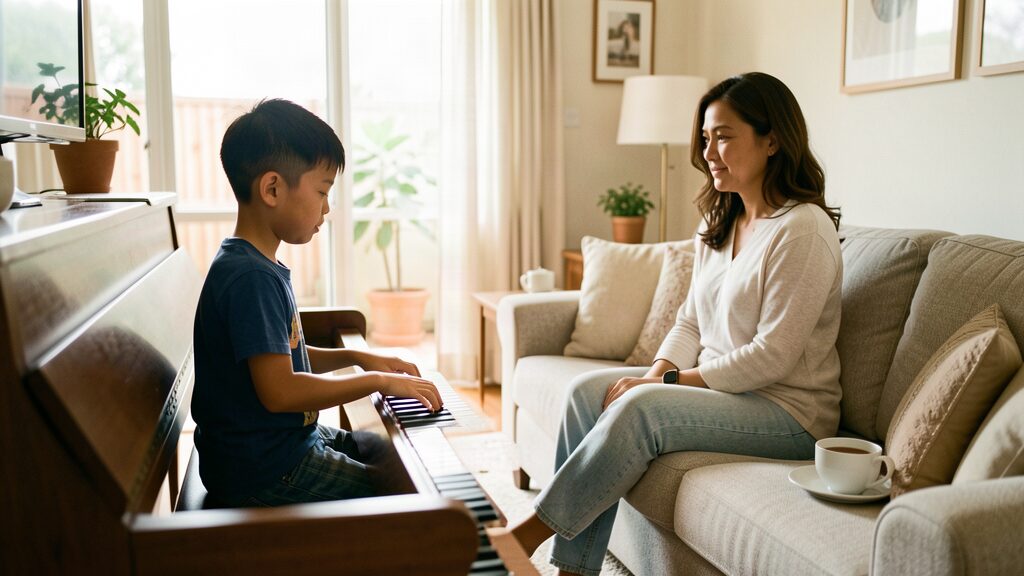
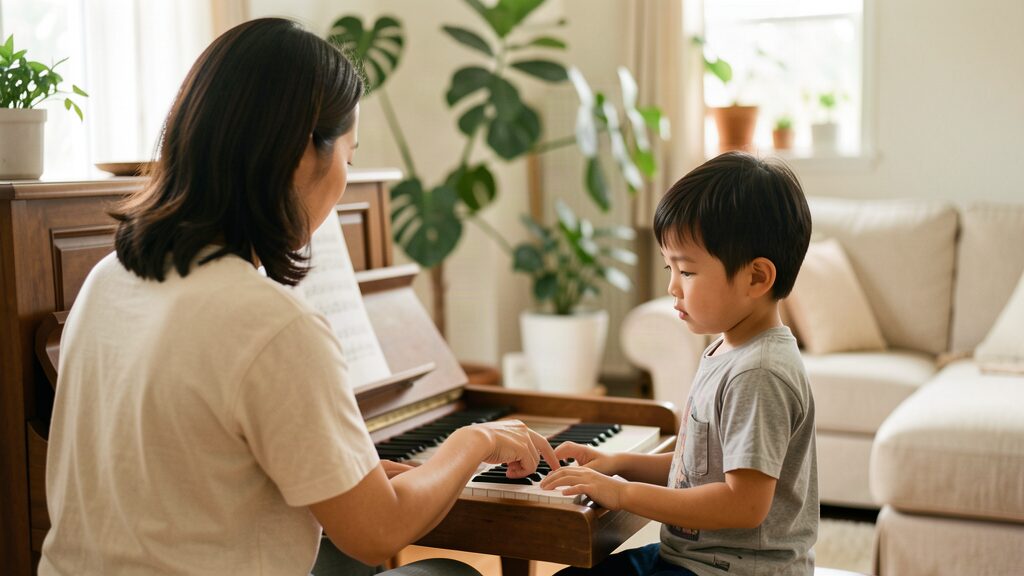
First notes, first pieces, first proper hand position. Young beginners get a gentle build, at the pace they can actually hold.
Sally Chang has been teaching piano in Brisbane’s western suburbs for over twenty years. Lessons are one to one, for beginners through to advanced players, and can be taught in English or Mandarin.
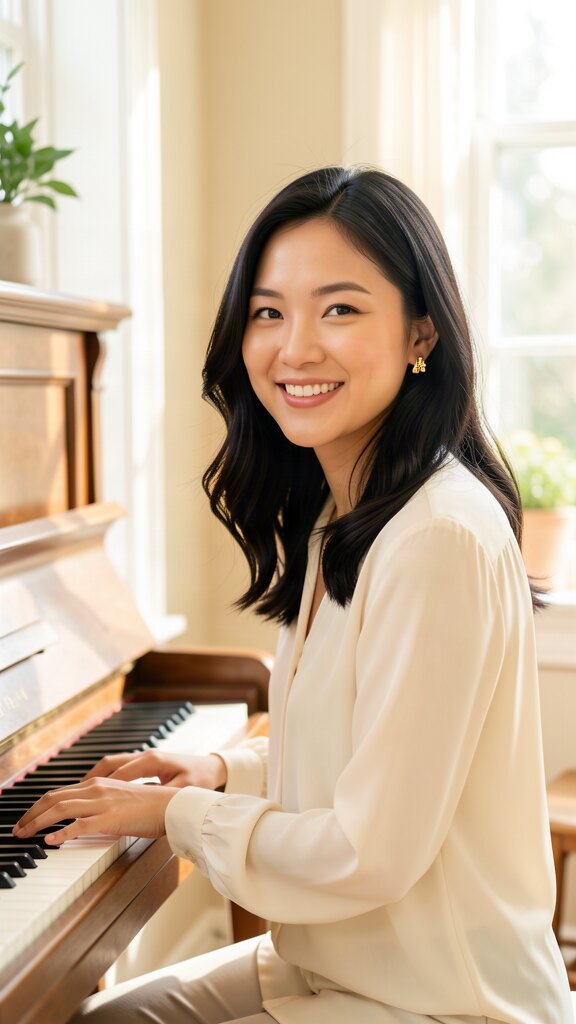
Sally is an accredited music teacher whose experience spans over twenty years, across both classical and contemporary piano. She has guided students through graded examinations and eisteddfods, and has taught just as many who simply wanted to play well for the pleasure of it.
Her approach puts enjoyment and confidence first. The technical work is real, but it is built on three things: reading ability, listening skills and finger technique, with music theory taught alongside rather than as a separate chore.
She teaches from Mount Ommaney, and most families find her the way everyone else did — through someone who already sends their child to her.
Some children are starting from nothing. Some are working towards an exam or a competition. Some just want to play well, with nothing to prove.
First notes, first pieces, first proper hand position. Young beginners get a gentle build, at the pace they can actually hold.
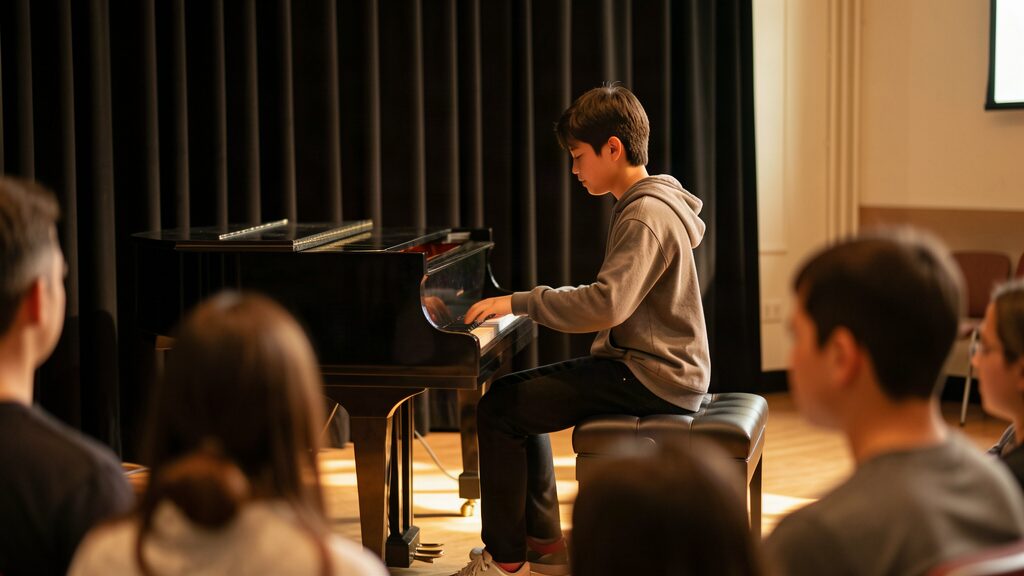
Structured preparation for AMEB and comparable pathways, and for competition performance. Real rigour, without the joy going out of it.
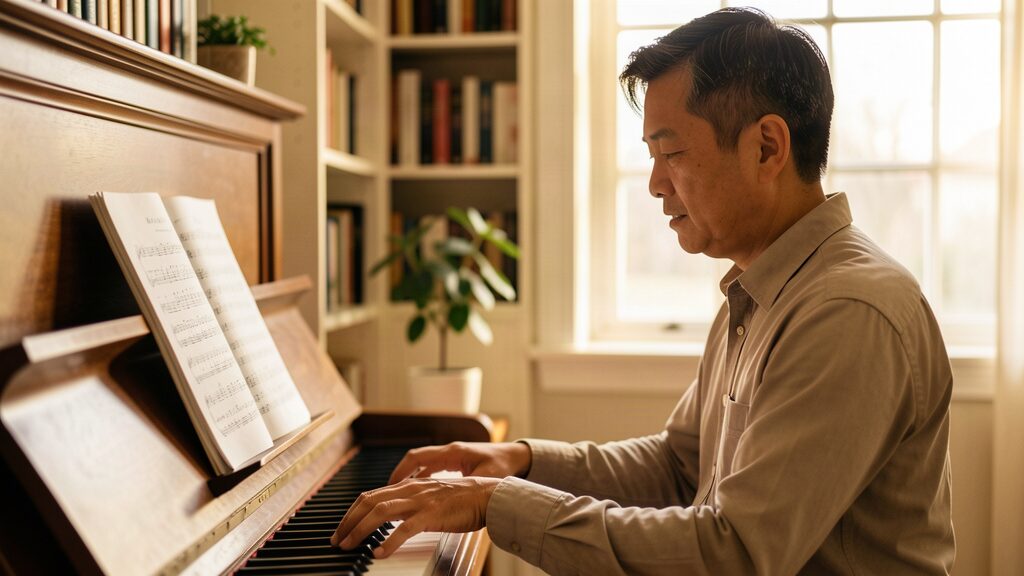
Adults returning after years away, and adults starting for the first time. No exam, no recital, no pressure — just playing.
A short form covers the practical things — experience so far, what they have at home to practise on, and what they are hoping for. Two minutes, and it saves repeating all of it later.
Sally meets you and your child, either in person or over the phone. You both work out whether it is a good fit. There is nothing to pay for that, and no obligation afterwards.
You begin when you are ready and continue for as long as it is working for your family. There are no terms to enrol into and no fixed commitment.
A good teacher shortens the road considerably. These are the things every student works on, whatever else they are playing.
Reading music
So a student can pick up something they have never seen before and play it.
Listening and ear training
So they can hear when something is not right, and work out how to fix it themselves.
Technique and finger work
Hand position, independence and exercises that build real speed over time.
Music theory
Taught alongside the playing rather than as a separate subject, so it actually sticks.
Sight reading
The fluency that makes a brand new piece feel approachable rather than frightening.
Performing
Optional, but there for anyone who wants it. Half the value is in the preparation.
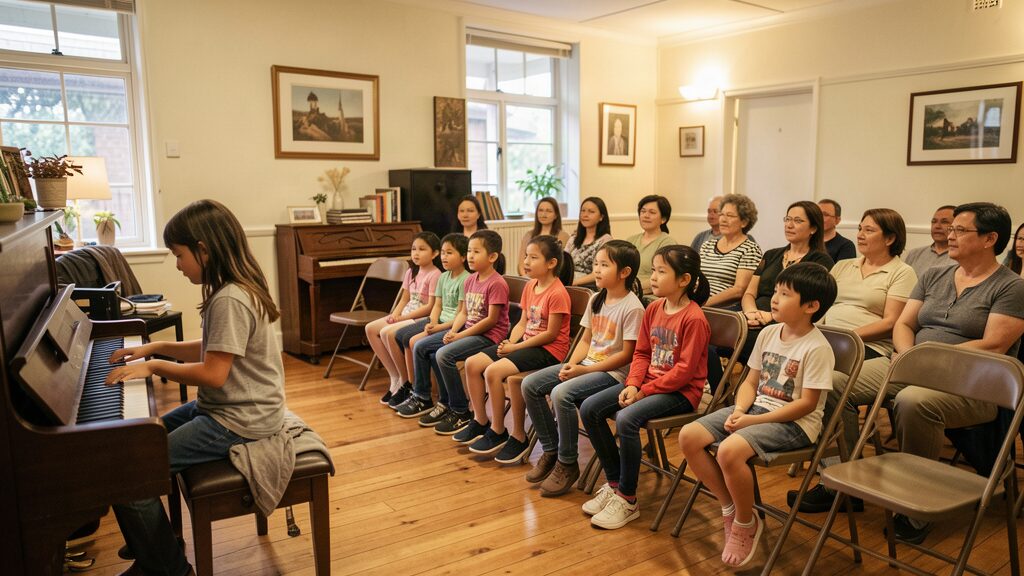
Sally holds a student music festival twice a year. Everyone is welcome to play, including complete beginners and adults, and families are very welcome in the audience.
Most students play one or two pieces. Nobody is required to perform — but most do, and the room is always friendly.
“I was referred to Ms Sally by one of our friends. She was really impressed with her teaching and how fast her son learnt to play. We had been to another place previously for a few months with no progress. When we started with Ms Sally my daughter progressed so quickly. In four months my six year old could read the notes and play with both hands.”
Shani, parent
“I’ve been taking lessons from Sally for the past two years, and I have to say how wonderful and talented she is as a piano teacher — my weekly lessons are easily my highlight. Her lessons are fun and engaging, and it’s clear she has a natural gift for teaching.”
Frank, 31
“Our son is autistic and we had been told piano lessons probably wouldn’t work for him. Ms Sally just adjusted everything without making it a big deal. Two years later he plays every day, unprompted, and it’s the calmest part of his week.”
Priya, parent
“My daughter sat her Grade 4 exam last year and got an A. But honestly the mark is not the thing. She has a teacher who genuinely likes her, and that has done more for her confidence at school than anything else we have tried.”
Wei, parent
“I started at 54 having never played anything. I was quite nervous about being the oldest person in the room, and it turned out there was no room — it’s just me and Sally, and she is endlessly patient. I play most evenings now.”
Margaret, adult student
“Lessons are taught in Mandarin for our family, which our parents are much happier about. It means the grandparents can actually help with practice during the week.”
Lina, parent
Yes, you need something to practise on. A real piano is ideal, and a digital piano with weighted, touch-sensitive keys is a very good alternative. A keyboard without weighted keys is fine for the first few weeks to see whether your child takes to it, but it will hold them back once they progress — so if you are buying, it is worth getting that right from the start.
Most children are ready somewhere between five and seven. It depends less on age than on being able to sit and concentrate for a lesson and follow simple instructions. If your child is younger and keen, the first meeting is the best way to find out.
Yes — graded examinations, eisteddfods and competitions. Plenty of students go that route. It is never compulsory though, and plenty never sit an exam at all.
No. There are no term-based enrolments and no fixed commitment. Students start when they are ready and continue for as long as it is working for their family.
Absolutely, and they make up a good share of students. Adults returning after years away, and adults starting from nothing, are both very common. Nobody is ever the odd one out.
Lesson fees are discussed at the initial meeting, and confirmed in writing before lessons begin. There is nothing to pay for that meeting and no obligation afterwards.
Fill in the short form so Sally knows a little about your child, and she will arrange a time to meet.
Fill in a short form about your child and Sally will be in touch to arrange a time to meet. No cost, no obligation, and no lesson fees discussed until you have actually met.